

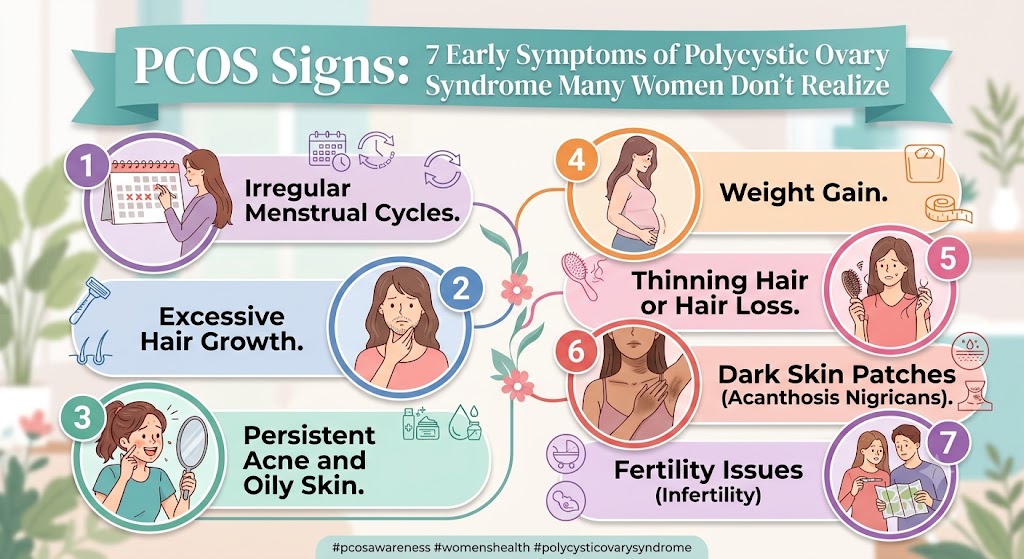
PCOS Signs: 7 Early Symptoms of Polycystic Ovary Syndrome
PCOS signs (Polycystic Ovary Syndrome) is a hormonal disorder affecting 10% to 12% of Malaysian women of reproductive age. Unfortunately, many women only realize they have PCOS when they face fertility issues—often 3 to 5 years after their first symptoms appear.
PCOS signs can be detected earlier. Here are 7 key symptoms you need to watch for.
1. Irregular Menstrual Cycles (The Most Common PCOS Sign)
This is the most frequent PCOS sign that occurs. Normally, periods come every 21-35 days. Women with PCOS may experience:
- Periods coming more than 35 days apart or every 3-5 months
- No period at all (amenorrhea) for more than 6 months
- Bleeding that is very heavy or very light
This occurs because hormonal imbalance disrupts the ovulation process.
2. Excessive Hair Growth (Hirsutism)
This PCOS sign occurs due to increased androgen (male hormone) levels. Women may notice thick, dark hair growth on:
- Chin and face
- Chest and abdomen
- Upper thighs
3. Persistent Acne and Oily Skin
PCOS acne differs from regular acne because it:
- Appears on the lower part of the face (jawline, chin, neck)
- Is persistent and difficult to treat with regular skincare
- Often appears as deep, painful cysts
- Worsens before or during menstruation
4. Weight Gain
Another PCOS sign often overlooked is difficulty losing weight. Women with PCOS tend to:
- Experience obesity or overweight
- Have weight gain concentrated around the abdomen and upper body
5. Thinning Hair or Hair Loss
Contrary to excessive hair growth, this PCOS sign causes:
- Hair on the scalp to thin out
- Hair loss on the top of the head (similar to male pattern baldness)
6. Dark Skin Patches (Acanthosis Nigricans)
A PCOS sign visible on the skin:
- Dark, thick, velvety skin patches
- Usually found in neck folds, armpits, groin, and under the breasts
7. Fertility Issues (Infertility)
The most distressing PCOS sign for many women:
- Difficulty conceiving after 1 year of unprotected intercourse
- Lower egg (oocyte) quality compared to women of the same age
