

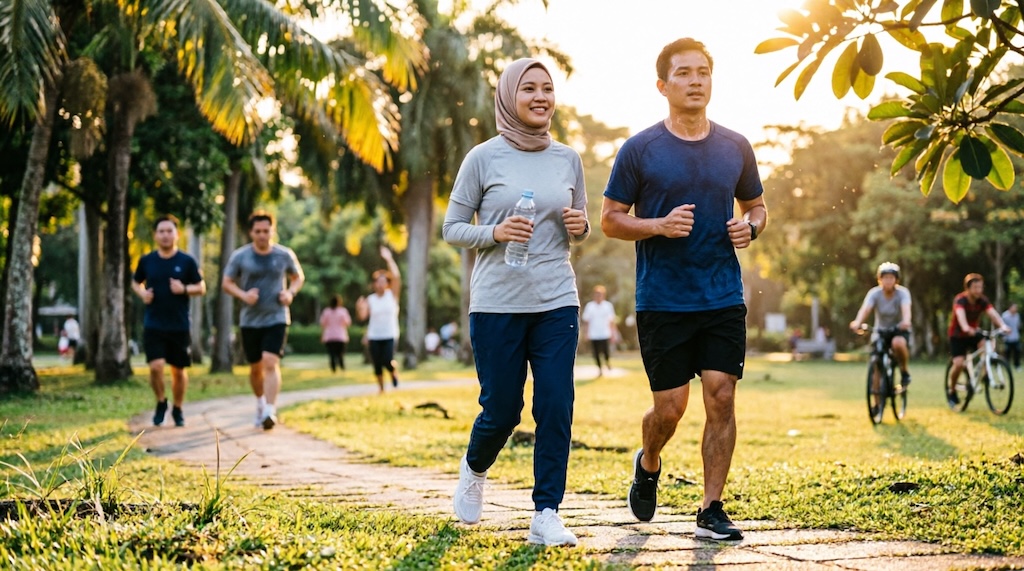
"Exercise is good for your health"—we hear this message often. But did you know that exercise can also improve your chances of pregnancy?
The right physical activity can balance hormones, increase blood flow to reproductive organs, reduce stress, and help maintain a healthy weight. However, exercise that is too intense or extreme can have the opposite effect.
This article will guide you on the best types of exercise for fertility, how much to do, and what to avoid.
How Does Exercise Help Fertility?
Exercise benefits fertility through several mechanisms:
| Mechanism | Effect on Women | Effect on Men |
| Increases blood flow | Better blood flow to uterus and ovaries | Better blood flow to testicles |
| Balances hormones | Helps regulate ovulation | Increases testosterone |
| Reduces stress | Lowers cortisol (stress hormone) | Lowers cortisol, improves sperm quality |
| Weight management | Reduces PCOS risk and pregnancy complications | Reduces risk of low sperm count due to obesity |
| Improves insulin sensitivity | Important for women with PCOS | Helps blood sugar control |
Best Types of Exercise for Female Fertility
1. Brisk Walking
| Intensity | Low |
| Frequency | 30 minutes, 5 times per week |
| Benefits | ✅ Increases blood flow to pelvis ✅ Reduces stress ✅ Helps weight control |
| Suitable for | All stages, including during fertility treatment |
2. Yoga
| Intensity | Moderate |
| Frequency | 20-30 minutes, 3-4 times per week |
| Benefits | ✅ Reduces stress ✅ Increases pelvic flexibility ✅ Balances hormones |
| Recommended poses | Butterfly pose, Cat-Cow, Legs-Up-The-Wall, Supta Baddha Konasana |
| Poses to avoid (during pregnancy or after embryo transfer) | Deep twists, headstands, deep backbends |
3. Swimming
| Intensity | Moderate |
| Frequency | 30 minutes, 3-4 times per week |
| Benefits | ✅ Full-body low-impact exercise ✅ Good for PCOS (reduces inflammation) ✅ Reduces stress |
| Caution | Avoid water that is too hot (can temporarily affect egg quality) |
4. Light Strength Training
| Intensity | Moderate |
| Frequency | 20-30 minutes, 2-3 times per week |
| Benefits | ✅ Improves insulin sensitivity ✅ Builds lean muscle mass ✅ Helps weight control |
| Examples | Squats, lunges, bicep curls with light dumbbells (1-3 kg) |
Best Types of Exercise for Male Fertility
1. Moderate Aerobic Exercise
| Examples | Brisk walking, light jogging, leisurely cycling |
| Frequency | 30 minutes, 3-5 times per week |
| Benefits | ✅ Increases sperm count ✅ Improves sperm motility ✅ Reduces oxidative stress |
2. Strength Training
| Examples | Moderate weight lifting, squats, lunges, push-ups |
| Frequency | 20-30 minutes, 2-3 times per week |
| Benefits | ✅ Increases testosterone ✅ Helps maintain healthy weight |
3. Yoga & Meditation
| Frequency | 15-20 minutes, 3-4 times per week |
| Benefits | ✅ Reduces stress (high cortisol is linked to low sperm quality) ✅ Improves overall reproductive health |
Types of Exercise to AVOID
Not all exercise is good for fertility. Here are types of exercise to avoid, especially when trying to conceive or undergoing fertility treatment:
For Women:
| Type of Exercise | Why to Avoid |
| High-intensity exercise >60 minutes/day | Can disrupt ovulation and menstrual cycles |
| Endurance training (marathons, triathlons) | Can cause amenorrhea (cessation of periods) |
| Exercise to the point of extreme exhaustion | Increases cortisol, disrupts reproductive hormones |
| High-impact exercise (after embryo transfer) | Can disrupt implantation |
For Men:
| Type of Exercise | Why to Avoid |
| Long-distance cycling (>3 hours/day) | Pressure on perineum and increased scrotal temperature can affect sperm quality |
| Exercise that overheats the testicles | Excessive heat damages sperm production |
| Use of steroids or certain bodybuilding supplements | Can cause testicular shrinkage and low sperm count |
Exercise Guidelines by Phase
| Phase | Recommended Exercise | Exercise to Avoid |
| During menstruation | Light walking, stretching, gentle yoga | High-intensity exercise, heavy weight lifting |
| Follicular phase (days 1-14) | Stay active – walking, swimming, yoga | No specific restrictions |
| Ovulation (fertile window) | Light exercise only | Intense exercise that causes stress |
| Luteal phase (days 15-28) | Moderate – reduce intensity if bloated or tired | Exercise that puts pressure on the abdomen |
| After embryo transfer (2WW) | Rest, light walking (10-15 minutes) | ALL intense exercise, jumping, strong stretching |
| During pregnancy | Walking, swimming, prenatal yoga (with doctor's approval) | High fall risk, high impact, contact sports |
How Much Exercise Should You Do?
| Category | Target | Notes |
| Women with normal cycles | 150 minutes moderate exercise/week (e.g., 30 min x 5 days) | Ideal for reproductive health |
| Women with PCOS | 150-200 minutes/week combining cardio & strength | Important for insulin sensitivity |
| Women with high BMI | Increase gradually, avoid excessive exercise | Losing 5-10% body weight can restore ovulation |
| Women with low BMI | Reduce cardio; add light strength training | Being underweight can stop periods |
| Men | 150-200 minutes moderate exercise/week | Avoid overheating the scrotum |
Important Tips Before Starting Exercise
- Start slowly – If you haven't been active, start with 10-15 minutes a day and gradually increase.
- Stay hydrated – Drink enough water before, during, and after exercise.
- Listen to your body – If you feel pain, dizziness, or extreme fatigue, stop and rest.
- Don't overdo it – More isn't always better for fertility.
- Consistency matters more than intensity – Consistent moderate exercise is better than occasional intense workouts.
Frequently Asked Questions (FAQ)
- Can I exercise during IVF treatment?
Yes, for the early phase (ovarian stimulation). Light walking and stretching are allowed. After embryo transfer, rest and only light walking (10-15 minutes) is recommended. Always follow your doctor's advice.
- Is yoga safe for fertility?
Yes, most yoga poses are safe and beneficial. Avoid poses that put strong pressure on the abdomen or involve deep twists, especially after embryo transfer or if confirmed pregnant.
- Can exercise help PCOS?
Yes. Exercise is a first-line treatment for PCOS. It improves insulin sensitivity, helps restore ovulation, and aids weight management.
- Is cycling bad for male fertility?
Leisurely cycling (less than 3 hours/week) is not problematic. Long-distance cycling (>3 hours/day) can increase scrotal temperature and affect sperm quality. Use an appropriate saddle and take regular breaks.
- Can I exercise if I'm already pregnant?
Yes, with doctor's approval. Walking, swimming, and prenatal yoga are safe. Avoid activities with a fall risk or high impact.
Conclusion: Exercise Smart for Fertility
Exercise is a powerful tool to improve fertility—when done correctly. The keys are moderation, consistency, and listening to your body.
| Principle | Message |
| Do | 30 minutes of moderate exercise, 5 days per week |
| Avoid | Prolonged high-intensity exercise (>60 minutes/day) |
| Be consistent | A little every day is better than a lot once in a while |
| Listen to your body | Rest if you're tired or in pain |
Start today. Small steps toward better health, for your family's future.
Looking for personalized exercise advice for your fertility journey?
Book a consultation with our fertility specialist at Alhaya Fertility. We will help design a physical activity plan tailored to your health status and fertility goals.
