

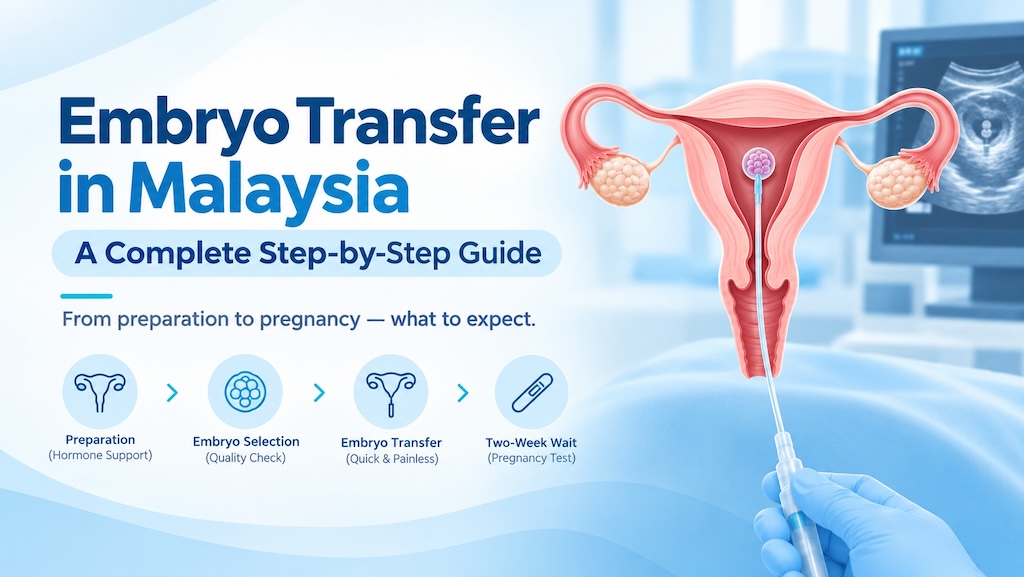
Embryo transfer is often described as the most emotionally significant moment in an IVF cycle. After weeks of injections, monitoring, and waiting, this brief procedure represents the culmination of your journey so far. Yet many patients arrive at their embryo transfer appointment feeling anxious about what will actually happen.
At Alhaya Fertility Centre, we believe that understanding the process reduces fear. This guide walks you through exactly what to expect during an embryo transfer in Malaysia, from preparation to the moments after, so you can approach your transfer day with confidence and calm.
Fresh vs Frozen Embryo Transfer: Which Is Right for You?
Before discussing the procedure itself, it is important to understand which type of transfer your specialist has recommended:
| Feature | Fresh Embryo Transfer | Frozen Embryo Transfer (FET) |
| Timing | 3–5 days after egg retrieval | In a subsequent natural or medicated cycle |
| Hormone Levels | Elevated from stimulation drugs | Optimised and controlled baseline |
| Endometrial Receptivity | May be affected by stimulation | Synchronised precisely with embryo stage |
| Success Rates | Comparable; FET may be higher for some patients | Increasingly preferred for PGT-A tested embryos |
| OHSS Risk | Small risk if high responder | Eliminated entirely |
Your fertility specialist will recommend the approach best suited to your hormone profile, embryo quality, and individual health factors. There is no universally “better” option—only the right one for you.
Preparing for Your Embryo Transfer Day
Bladder Preparation
A full bladder is essential for ultrasound-guided transfer. It straightens the uterus and provides a clear acoustic window for precise catheter placement. You will typically be asked to drink 500–750ml of water 45–60 minutes before the procedure. Do not overfill—an uncomfortably full bladder can cause uterine contractions. Communicate with your nurse if you feel excessive discomfort.
Medications
Continue all prescribed progesterone support (vaginal, oral, or injectable) exactly as directed. Do not skip doses on transfer day. Bring your medication list to confirm timing with your team.
What to Wear & Bring
Wear comfortable, loose clothing. Avoid perfumes, scented lotions, or nail polish, as volatile organic compounds can affect embryo culture environments in adjacent lab areas. Bring your partner for emotional support and any identification documents requested by the clinic.
During the Procedure: What Actually Happens
The embryo transfer itself typically takes 5–15 minutes and requires no anaesthesia. Here is the step-by-step process:
- Positioning: You will lie on the examination table in lithotomy position, similar to a pap smear.
- Ultrasound Guidance: A full abdominal ultrasound probe is placed on your lower abdomen to visualise the uterine cavity in real time.
- Catheter Insertion: A thin, soft catheter loaded with your embryo(s) is gently guided through the cervix into the optimal implantation site under continuous ultrasound visualization.
- Embryo Release: The embryologist confirms release via ultrasound flash. The catheter is withdrawn slowly and checked under microscope to confirm complete transfer.
- Rest Period: You will rest lying down for 15–30 minutes post-transfer. Current evidence shows extended bed rest does not improve outcomes, but a brief rest period allows emotional decompression.
💡 Does it hurt? Most patients describe embryo transfer as painless or comparable to a pap smear. Mild cramping is normal. Inform your doctor immediately if you experience sharp pain.
Immediately After Transfer
You can resume normal light activities after the brief rest period. There is no evidence that gravity affects implantation—the embryo does not “fall out.” Walking, gentle movement, and returning to work (if non-strenuous) are all safe and encouraged.
Your clinic will provide written post-transfer instructions and emergency contact numbers. Keep these accessible.
Common Malaysian Myths About Embryo Transfer
| Myth | Evidence-Based Reality |
| Strict bed rest improves success | Extended bed rest may reduce blood flow and increase clotting risk. Light activity is recommended. |
| Eating pineapple helps implantation | No clinical evidence supports this. Bromelain in supplement form may actually increase bleeding risk. Normal dietary pineapple in moderation is harmless. |
| Driving home is unsafe | Perfectly safe. If anxiety or mild sedation was used, arrange alternative transport. |
When to Contact Your Clinic Post-Transfer
Seek immediate medical attention if you experience:
- Severe abdominal pain or bloating
- Heavy vaginal bleeding (soaking a pad in under an hour)
- Fever above 38°C
- Shortness of breath or dizziness
- Signs of OHSS (rapid weight gain, reduced urination)
Mild spotting, light cramping, and breast tenderness can be normal and do not necessarily indicate failure. Always call your clinic if uncertain—it is better to ask than to worry alone.
Your Journey Continues Beyond Transfer Day
Embryo transfer is a milestone, not a finish line. The two-week wait is challenging, and regardless of outcome, your feelings are valid. At Alhaya Fertility, our support extends beyond the procedure—we are here for every step, every question, and every emotion.
Have questions about your upcoming transfer? Book a Pre-Transfer Consultation
⚠️ Medical Disclaimer
This article is for informational purposes only. Individual embryo transfer protocols vary based on medical history and clinical considerations. Always follow the specific instructions provided by your fertility specialist at Alhaya Fertility.
