

Endometriosis & IVF: Is IVF Treatment Effective for Endometriosis Patients?
Endometriosis is a chronic gynecological disease affecting 2% to 10% of women of reproductive age. It is characterized by the presence of endometrial-like tissue outside the uterine cavity, triggering chronic inflammation and scar formation. As a result, 30% to 50% of women with endometriosis experience fertility problems.
While this challenge is real, IVF (In Vitro Fertilization) treatment offers significant hope. This article will guide you through how endometriosis affects fertility, the latest strategies to improve IVF success, and the factors to consider.
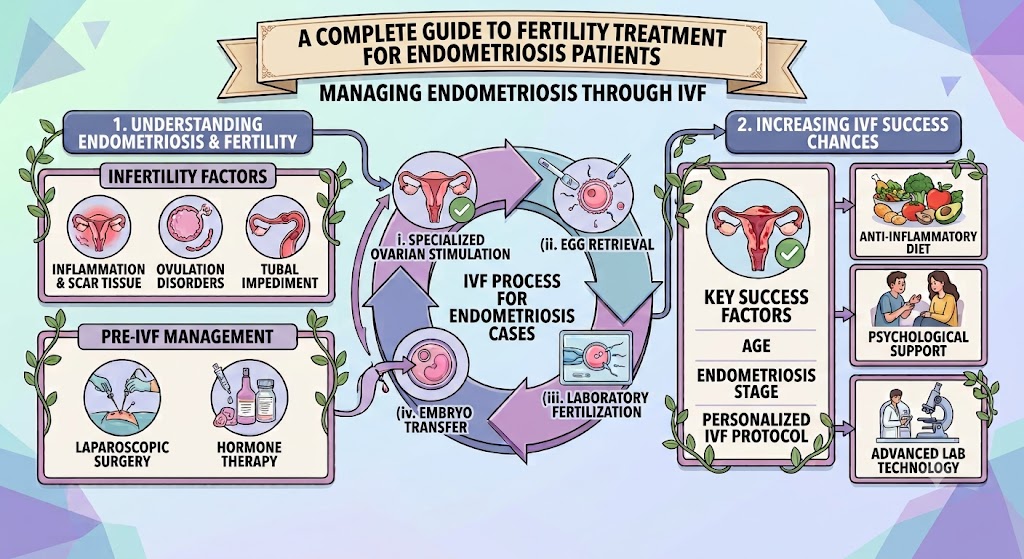
How Does Endometriosis Affect Fertility?
Endometriosis affects fertility through several mechanisms:
| Mechanism | Effect on Fertility |
| Adhesions & Distorted Anatomy | Pelvic adhesions can block ovulation, egg pickup by the fallopian tubes, and embryo transport. |
| Chronic Inflammation | A pelvic environment rich in pro-inflammatory cytokines damages egg quality, disrupts fertilization and embryo implantation. |
| Effect on Egg Quality | Oxidative stress from inflammation can damage egg DNA and reduce embryo quality. |
| Impaired Implantation | The endometrium becomes less receptive to embryos due to inflammation and hormonal imbalance. |
Is IVF Effective for Endometriosis Patients?
The answer is: YES. Studies show that pregnancy rates for endometriosis patients undergoing IVF are comparable to those with infertility due to other factors.
A retrospective study in Indonesia found that although the number of eggs successfully retrieved and embryo cleavage rates were lower in endometriosis patients, biochemical, clinical, and ongoing pregnancy rates did not differ significantly compared to patients with tubal factor infertility.
| Parameter | Endometriosis | Tubal Factor | Significant? |
| AMH (ng/mL) | 2.1 ± 1.5 | 3.4 ± 3.1 | ✅ Yes (p=0.004) |
| Number of Eggs | 8 ± 6 | 11 ± 7 | ✅ Yes (p=0.000) |
| Clinical Pregnancy Rate | 31.2% | 36.3% | ❌ No (p=0.215) |
| Ongoing Pregnancy Rate | 19.6% | 21.2% | ❌ No (p=0.511) |
Latest Strategies to Improve IVF Success
Although IVF is effective, the right treatment strategy is key to maximizing success. Here are the latest approaches recommended by experts:
1. Ovarian Stimulation Protocol: Ultralong GnRH Agonist vs Antagonist
Ultralong GnRH Agonist Protocol involves GnRH agonist injections for 2-6 months before ovarian stimulation. This approach reduces inflammation and improves pregnancy rates. A study in Malaysia reported that the ultralong protocol was used in 70.1% of cases for endometriosis patients undergoing IVF-ICSI.
GnRH Antagonist Protocol offers a shorter treatment duration, lower gonadotropin doses, and lower risk of Ovarian Hyperstimulation Syndrome (OHSS).
Conclusion: Both protocols show comparable outcomes. The choice depends on the patient's profile and the specialist's recommendation.
2. Frozen Embryo Transfer (FET) vs Fresh Transfer
Frozen embryo transfer (FET) after GnRH agonist pretreatment may provide better outcomes compared to fresh transfer, as it allows the anti-inflammatory effects of GnRH agonist to work fully and avoids the negative effects of high estrogen on an already inflamed endometrium.
3. Surgery Before IVF: When Is It Necessary?
The issue of surgery for endometrioma (ovarian cysts) before IVF is a hotly debated topic.
- Benefits of Surgery: Can reduce cyst size (>3cm), reduce pain, and improve access to follicles during egg retrieval.
- Disadvantages of Surgery: Excision surgery (stripping) can reduce ovarian reserve (AMH).
Latest Guidelines:
- Surgery BEFORE IVF (OPS-IVF) was found to produce lower outcomes in terms of embryo quality and pregnancy rates compared to performing surgery AFTER IVF (IVF-OPS).
- ESHRE 2022 Guidelines recommend endometrioma surgery before IVF only for cases of severe pain or to improve access to follicles during egg retrieval.
New Strategy: Aspiration & Sclerotherapy
A recent study showed that aspiration (draining cyst fluid) and sclerotherapy under transvaginal ultrasound guidance, combined with dienogest, effectively reduced endometrioma size by up to 58.49% within 3 months, without compromising egg or embryo quality.
4. Alternative Treatment: HIFU (High-Intensity Focused Ultrasound)
HIFU is a non-invasive treatment that uses focused ultrasound waves to destroy adenomyosis or endometriosis lesions.
A case report showed that a patient with Stage IV endometriosis and adenomyosis who experienced repeated IVF failure successfully conceived after HIFU treatment combined with GnRH agonist pretreatment. This technology is now available in Malaysia.
Prognostic Factors for IVF Success in Endometriosis Patients
Several factors influence IVF success rates:
| Factor | Effect on Success |
| Long Duration of Infertility | Significantly reduces pregnancy chances. |
| Moderate to Severe Endometriosis (Stages III/IV) | Reduces live birth rate |
| Presence of Adenomyosis | Significantly reduces live birth rate |
| Age | The primary factor affecting egg quality. |
| Ovarian Reserve (AMH/AFC) | Lower AMH levels are associated with fewer eggs retrieved. |
| Presence of Endometrioma | Can affect ovarian response and egg quality, but surgery before IVF may not always be necessary. |
Frequently Asked Questions (FAQ)
- Is IVF effective for severe endometriosis?
-
- Yes. Although challenges are greater, studies show IVF is an effective option. Protocols like ultralong GnRH agonist and FET can improve chances.
- Should I have endometriosis surgery before IVF?
-
- Not necessarily. Surgery may affect ovarian reserve. Latest guidelines recommend surgery only for severe pain or follicle access. Discuss with your specialist.
- Does adenomyosis affect IVF success?
-
- Yes. Studies show adenomyosis (often occurring alongside endometriosis) reduces live birth rates in IVF-ICSI. Treatments like GnRH agonist or HIFU may help.
- What is the best IVF protocol for endometriosis?
-
- Both ultralong GnRH agonist and antagonist protocols show comparable outcomes. FET after GnRH agonist pretreatment may provide additional benefits.
Conclusion: There Is Still Hope
Endometriosis is a challenge, not the end of your dream to have children. Although it can affect egg quality and implantation, IVF offers success rates comparable to other causes of infertility.
Keys to success are:
- Early diagnosis and proactive treatment.
- Personalized treatment protocols (ultralong GnRH agonist, FET, additional treatments like HIFU if needed).
- Informed decisions about surgery—perform only if truly necessary.
Don't let endometriosis delay your dream. Early action gives you more options and higher success rates.
Do you have endometriosis and are planning IVF?
Book a consultation with our fertility specialist at Alhaya Fertility. We will assess your unique condition and design a personalized treatment plan to give you the best chance of success.
